
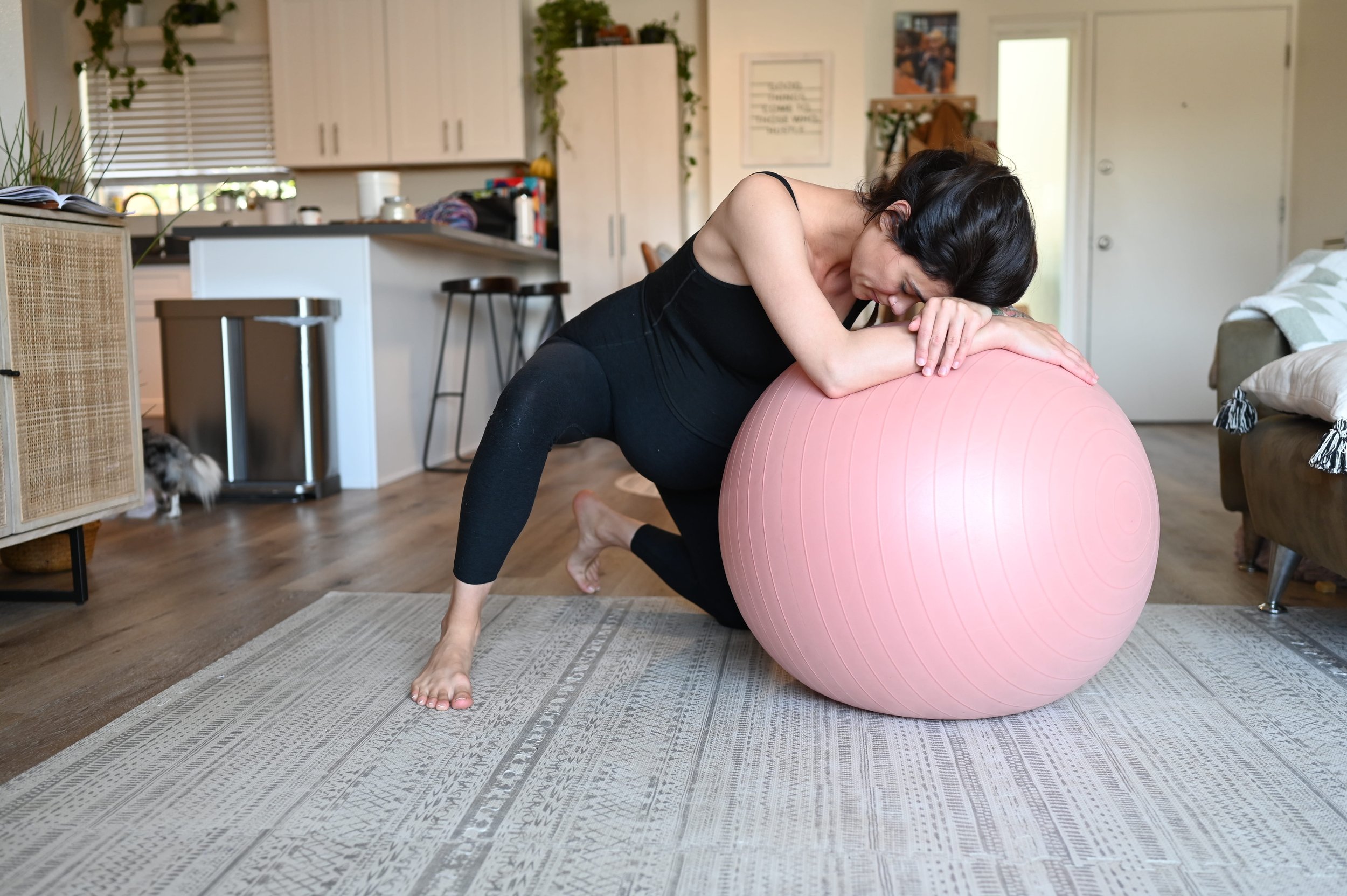
Virtual Body Ready Method® Birth Prep
Personalized Movement Coaching for LaborBody Ready Method® is birth preparation built around your actual body, not a generic prenatal workout handed to everyone. During your virtual session, we take a close look at how your pelvis, core, and whole body move, then put together a specific plan made for you. You'll leave with positions and movements to practice through pregnancy and into labor, work aimed at creating room for your baby, making pregnancy and labor feel more manageable, and setting your body up for an easier recovery.
Your body is unique. Your birth prep should be, too.
✓ Webster Certified · Since 2015
✓ ICPA Perinatal Certified
✓ Certified Professional Midwife
✓ BRM® Certified Pro
✓ 300+ Births Attended
BIRTH PREP
|
100% VIRTUAL
|
BIRTH PREP | 100% VIRTUAL |
Live Virtual Birth Prep Sessions
Get Your Body Ready for Labor, No Matter Where You're Logging In From
One-on-One Birth Prep Coaching, Delivered Entirely Online
Most birth prep focuses on your head: what to expect, what the stages are called, what counts as "normal." This is about your body instead. A virtual Body Ready Method® session looks at how you sit, stand, and hold tension, then turns that into a movement plan built to give your baby room to rotate and descend. It all happens over video, so where you live has nothing to do with the quality of birth prep you get.
Prenatal Advice Tells You What's Coming. It Rarely Gets Your Body Ready to Handle It.
Bounce on the ball. Get your steps in. Try a few cat-cows before bed. None of that is wrong, exactly. It's just generic enough to apply to anyone, which means it isn't really built around you.
Here's what rarely gets said out loud: the habits you carry through an ordinary day are quietly shaping how your labor unfolds. The hip you always lean into. The side you sleep on, every single night, for months straight. Nine hours a day hunched at a desk. A cesarean scar from last time. A pelvic floor that's been clenched so long it's forgotten how to soften.
An ultrasound won't pick any of that up. Labor will.
And once labor slows down, hospitals are often working against a clock. Pitocin gets suggested, then an epidural, eventually the phrase "failure to progress," and sometimes a cesarean that a different position, offered at the right moment, might have avoided entirely.
You can't script exactly how your birth goes. But there's a real, physical list of things within your control, and almost nobody teaches it. That's precisely the gap a virtual birth prep session with a Body Ready Method® specialist is built to close, and your zip code doesn't factor into it.
So What Is the Body Ready Method®, Exactly?
The Body Ready Method® (BRM®) is a movement-based approach to pregnancy and postpartum, built around one goal: a more efficient labor and an easier recovery. Rather than a generic prenatal workout, it looks closely at five specific systems in your body and builds you a plan focused on improving how well they move, balance, and respond to each other, all so your baby has the clearest possible path through your pelvis.
BRM® was created by Lindsay McCoy and is now used by more than 1,300 certified providers across 50 countries. It carries endorsements from DONA International, the International Childbirth Education Association, the American College of Nurse-Midwives, and the ICPA.
The Five Areas Every Session Covers
A real assessment doesn't stop at one body part in isolation. It looks at how these five systems function as a team.
Pelvis
How freely and evenly it moves through each of its three distinct levels.
Pelvic Floor
Its ability to release on cue, not just how strong it tests. One that won't let go is just as limiting as one that's weak.
Core
Pressure management and breath control, doing double duty as your pushing power and your baby's support system.
Upper Body
Mobility through your ribcage and shoulders. A stiff ribcage restricts your diaphragm, which restricts your pelvis in turn.
Movement Patterns
The habits that fill your actual day. This is where compensations hide, and where the biggest changes usually happen.
Why the Three Levels of Your Pelvis Matter More Than You'd Think
This single concept changes how most people approach labor, and it's exactly why a generic list of "good labor positions" so often misses the point.
Your pelvis isn't one opening. It's three, each requiring different movement to open, and your baby travels through all three in sequence, rotating along the way.
Baby's entry point
The uppermost level, where your baby first engages. Positions that tilt your pelvis forward, with knees drawn slightly closer together than your feet, tend to open this one best.
Where things stall most often
The narrowest of the three, and the one almost nobody hears about. Rotation happens here, and asymmetrical movement tends to be what gets it moving again.
Where your baby is born
The lowest level. It opens as your sit bones widen and your tailbone shifts freely backward, the exact opposite of what opens the inlet.
Which means a position helping you progress at 4 centimeters can be the very thing working against you at 9. Squat too early and you may press your baby into an inlet that hasn't opened yet. Stay flat on your back too long and you can pin a tailbone that needs freedom to move. This detail alone is often what separates a labor that keeps moving from one that grinds to a halt.
How This Shapes What Happens in Your Session
- We locate exactly where your restriction livesA five-pillar video evaluation shows whether the tightness sits at your inlet, mid-pelvis, or outlet, the detail that makes your plan personal instead of generic.
- Your plan targets that restriction directlyInstead of rehearsing every labor position in existence, you'll practice the small handful that speak to what's showing up in your body.
- You'll know what to reach for at each phase of laborEarly labor calls for different movement than transition does. You'll leave knowing the difference, so it's not guesswork at 3am.
- You leave with something concrete to bring alongA printable Labor Movement Cheat Sheet spells your plan out in plain language, so whoever's supporting you can follow it too.
What Sets This Apart From a Generic Program
Pre-recorded birth prep content is everywhere online. A live, personalized evaluation from an actual specialist is a different category of support entirely.
The Training Behind It
- Certified BRM® Pro, trained in advanced birth biomechanics
- Certified Professional Midwife with real clinical experience, not just movement theory
- 300+ births personally supported
- Two home births of her own, lived rather than studied
Built to Fit Into Your Actual Life
- 100% virtual, so there's no commute, no waiting room, no location limits
- A live conversation and evaluation, never a video you watch solo
- A plan that gets revisited and updated as your pregnancy changes
- Sessions from wherever you're most comfortable, on your schedule
To be straightforward about it: if movement homework is all you need, a downloadable program can hand you that. If you want someone who assesses your actual body, tells you what it means for your specific labor, and has supported births firsthand, that's a much shorter list. Now it doesn't matter whether that person lives anywhere near you.
What Actually Happens in a Virtual Session
Nothing here is left to a vague "let's see how it goes." Every session is calm, unhurried, and happens entirely over video.
What to Expect, Start to Finish
- We start by talkingPast births, current symptoms, what's worrying you, where you're planning to deliver, and who's supporting you.
- A live, guided evaluation over videoYou'll move through specific positions on camera so we can observe and coach your posture, alignment, breathing, and each of the five pillars in real time.
- Cueing and corrections as we goVerbal direction and visual guidance so you can feel where tension is sitting, and notice what it feels like when it lets go.
- Practice until it's automaticThree to five movements chosen specifically for your body, rehearsed together until you can find them without thinking.
- A written plan lands in your inboxExactly what to do, how often, and what changes to watch for.
- Your plan changes as your pregnancy doesWhat your body needs at 24 weeks isn't what it needs at 36, so your plan shouldn't stay static either.
What you'll need on your end: a device with a working camera, a bit of open floor space, and clothing you can move in. Something fitted helps your alignment show up clearly on screen.
Choose the Level of Support That Fits
Everything below is live, one-on-one Body Ready Method® coaching delivered entirely by video. What changes between them is depth and how often you meet.
The Body Ready Blueprint
One in-depth virtual evaluation and a birth prep plan built just for you
$225 60-minute virtual session- A complete five-pillar evaluation, live over video
- Real-time coaching and movement corrections
- 3–5 positions selected and practiced together
- Your written plan, delivered within 48 hours
Body Ready Complete
Ongoing support that grows with you all the way to your due date
$594 initial session plus three virtual check-insIncludes everything in the Blueprint, plus
- Three 30-minute check-ins spaced through your pregnancy
- A fresh reassessment and updated plan at every visit
- A printable Labor Movement Cheat Sheet for your birth bag
- Priority booking for your sessions
- The option to save one check-in for postpartum instead
Follow-Up Session
Check back in as often as your body calls for
$150 30-minute virtual session- A fresh look at whatever mattered most last time
- An updated plan that builds on your previous one
- Live coaching over video
- New movements added as your pregnancy progresses
Sessions Shaped Around What You're Actually Facing
Sometimes there's a specific concern that brought you here: a breech baby at 34 weeks, an induction already on the calendar, 41 weeks with no sign of labor starting, or contractions that keep starting and stopping without going anywhere.
Whichever session you book, first-time or follow-up, gets built entirely around your specific situation. The overall structure stays the same, but what we focus on and what you leave with is built around exactly what you're dealing with.
| What you're facing | What we'll focus on |
|---|---|
| Breech or transverse baby | Movement and balancing work aimed at the pelvic and soft-tissue patterns that may be limiting how much room your baby has, giving them the best chance to find a head-down position on their own. |
| Scheduled induction | Getting your pelvis and soft tissue ready ahead of time, plus a realistic movement plan for laboring around monitors, an IV line, and reduced mobility. |
| Past your due date (40+ weeks) | Full-body movement work geared toward descent and engagement, with extra attention on the inlet, since that's usually where an unengaged baby is waiting. |
| Prodromal (stop-start) labor | Contractions that stall are usually a positioning issue, not a stamina one. We'll work on creating space and releasing whatever asymmetry might be holding your baby in place. |
| Posterior or OP baby | One-sided, targeted movement to encourage rotation, along with the specific positions that open the mid-pelvis, where that rotation takes place. |
| Planning a VBAC | Attention to cesarean scar awareness, core function, and pelvic mobility, paired with movement prep aimed at supporting an efficient labor. |
| Pubic symphysis or SI joint pain | Getting you out of pain as a first step, then addressing the underlying imbalance so you're moving well, not guarding, once labor starts. |
| A difficult prior birth | An honest look at what happened last time, separating out what was physical and addressable, and building this session around exactly that. |
Fill out your intake form thoroughly. It's the single most useful step before your first session. The more you share about what's going on, what you've already tried, how past births went, and what's worrying you, the more prep work we can do ahead of time. That means more of your session goes toward coaching instead of catching up. If anything changes before your appointment, just send a quick update.
Dealing with something time-sensitive? If your baby is breech, an induction is scheduled, or you're past your due date, reach out directly rather than booking through the calendar. Urgent requests get priority whenever we can make it work.
When to Book Your First Session
Short version: earlier than most people assume, and it's almost never too late.
| Where you're at | What we'd suggest |
|---|---|
| Trying to conceive or first trimester | Start with the Blueprint. Building solid movement habits before your body changes shape is some of the easiest groundwork you'll ever lay. |
| 16–24 weeks | Body Ready Complete. This window gives real time to change how you move, not just manage discomfort as it shows up. |
| 24–32 weeks | Complete, or the Blueprint plus a follow-up. Still plenty of runway left. |
| 32–36 weeks | The Blueprint plus a follow-up. Your body responds quickly to focused work at this point, and positioning practice matters most now. |
| 36+ weeks | One or two highly specific sessions (an assessment plus a follow-up), built entirely around where you're at right now. Don't rule this out. Even two focused weeks of work has changed outcomes. |
| Something's happening right now | Reach out directly so we can get you on the calendar quickly. |
Why starting early matters: session openings are limited each week, and your body needs repetition to absorb something new. A movement you've practiced once or twice won't show up automatically at 4am in transition. Six weeks of steady practice beats a single rushed session every time.
Want to Start on Your Own First?
Build a foundation at your own pace
If a live session isn't the right first step for you yet, whether that's timing, budget, or just wanting to learn the basics on your own first, starting with self-study is a solid option.
The official Body Ready Method® self-study programs run on the exact same framework behind every live session, built by BRM® founder Lindsay McCoy. Access is yours for life, so it's there for this pregnancy and any future ones.
- Body Ready Prenatal Staying strong and comfortable through pregnancy while prepping for birth$197
- Body Ready Birth Birth positions, all three levels of the pelvis, and hands-on techniques$127
- Body Ready Postpartum Intentional recovery starting day one$87
- All three bundled All three programs together$297 $411
As a certified BRM® Pro, we can pass along a discount. Enter code dcoK1470 at checkout, or use the link below and it's applied automatically.
One thing to know: these self-study programs come directly from Body Ready Method®, not from us, so they're purchased separately and aren't a substitute for a live session. What they're useful for is a head start. Work through the material beforehand and you'll show up to your live session already comfortable with the movements and the vocabulary, which means we can go even further together.
Affiliate disclosure: this page earns a small commission on purchases made through this link, at no added cost to you. We only recommend programs we're personally certified in and use with our own clients.
Rounding Out Your Preparation
A virtual Body Ready Method® session does one job extremely well: it prepares your body. But your body is only one half of what shows up on delivery day.
The most prepared parents tend to have covered both angles: a body that's been trained, and a mind that understands what's unfolding. Knowing how to open your mid-pelvis doesn't help much if no one's explained what it means when your provider offers to break your water. And being able to name every intervention doesn't help if your body can't physically respond when the moment calls for it.
Half One
A Live Session Trains Your Body
- Mobility and function through your pelvis, core, and pelvic floor
- The three levels of your pelvis, and what movement opens each one
- Patterns rebuilt through weeks of practice, not memorized in an afternoon
- Labor positions your body can find on its own, under pressure
Half Two
The Complete Birth + Baby Course Prepares Your Mind
- A full walkthrough of pregnancy and your prenatal care options
- How to weigh a midwife against an OB for your care
- Labor stages, comfort techniques, breathwork, and relaxation tools
- Interventions, induction, and pain relief explained in plain language
- What's ahead postpartum, plus the basics of newborn care
Put together, that's the full picture: a body that already knows what to do, and a mind that understands exactly why.
Taught by a Certified Professional Midwife
The Complete Birth + Baby Course
Pregnancy · Labor · Postpartum · Newborn Care
Being informed and being educated aren't the same thing.
This course was built from everything learned while personally supporting hundreds of births as a Certified Professional Midwife. It's the class every expecting parent deserves: thorough, not the rushed version crammed into a single hospital conference room.
- Understand what's physically happening at every stage of labor
- Walk into provider conversations already informed
- Pick up comfort measures and breathing techniques you can use right away
- Know what each intervention means before it's ever offered to you
- Get ready for postpartum before you're in the middle of it
- Start newborn care with confidence instead of guesswork
Open to anyone, anywhere. No connection to Born & Raised required to enroll.
Figuring Out If This Is the Right Fit
This Is Probably a Good Fit If
- You're preparing for a birth of any kind: hospital, birth center, home, VBAC, planned cesarean, epidural, or unmedicated. Physical prep matters no matter which path you're on.
- Your last birth was difficult, and you're determined this one goes differently
- You're living with pelvic, SI, or pubic symphysis pain you've been told is "just part of pregnancy"
- You're concerned about tearing, abdominal separation, or pelvic floor issues after birth
- You want something more specific than generic "walk more, bounce on a ball" advice
- Your baby isn't positioned ideally, and you want to give them room to move
- You'd rather do this from home than track down a local provider
This Might Not Be the Right Fit If
- You need full childbirth education. This is physical preparation, so it doesn't cover labor stages, medical decision-making, or newborn care in depth. Our Complete Birth + Baby Course handles that side, and the two work well together.
- You're looking for a fitness program. This isn't cardio or strength training. It complements whatever you're already doing.
- You want a guaranteed outcome. No one can promise exactly how your birth will go, and anyone who claims otherwise should give you pause. What you can count on is walking in knowing your body and knowing what to do.
What Families Say
These reviews describe the original in-person version of this service, which included hands-on chiropractic work alongside the movement assessment. Left unedited for now. Swap in virtual-specific reviews as they come in.
We found Dr. Chrisi at 33 weeks when we learned our baby was breech. She was the first provider who actually explained what was going on in my pelvis instead of telling me to just do inversions and hope. The Webster Technique work paired with my Body Ready Method movement plan gave me something concrete to do every day. Our girl turned at 36 weeks. Worth every minute of the drive from Woodbury.
Ashley S., Woodbury, MN
Learning the three levels of the pelvis completely changed how I approached labor. I knew which positions opened which level and when to use each one, so instead of panicking when things slowed down I just moved. My labor and delivery nurse asked me where I had learned it. If you are looking for real birth prep in the Twin Cities and not just another class, start here.
Sarah M., St. Louis Park, MN
After an unplanned cesarean with my first, I wanted a VBAC and had no idea where to begin. Body Ready Complete gave me a plan for my scar mobility, my core, and my pelvic mobility, and Dr. Chrisi adjusted it every single visit as I grew. I got my VBAC. She is the only provider I could find in the Twin Cities who is both a prenatal chiropractor and a midwife, and you feel that difference immediately.
Cassie J., Eden Prairie, MN
Common Questions About Virtual Birth Prep
What exactly is the Body Ready Method®?
It's a movement-based system for pregnancy and postpartum aimed at a more efficient birth and easier recovery. Five specific areas get assessed (the pelvis, pelvic floor, core, upper body, and everyday movement patterns), and the findings shape a plan built to improve mobility, balance, and responsiveness so your baby has room to move.
How does meeting over video work?
We connect on a video call, and you'll move through specific positions on camera so your posture, alignment, and mobility can be watched and coached live, the same way it would happen in person, minus the drive. All you need is a device with a camera, some open floor space, and clothes you can move in.
Can a virtual session really compare to meeting in person?
For this kind of movement-based work, yes. The evaluation depends on watching how your body moves through specific positions, which comes through clearly on video, and the coaching happens the same way it would in a shared room: verbal cues, visual demonstration, and corrections in real time.
How is this different from prenatal yoga or a standard birth class?
Prenatal yoga is general movement for everyone. A birth class teaches you about the process. This assesses your individual body and builds a plan specifically for it, closer to working with a trainer who's watched you move first.
What's the best time in pregnancy to start?
Somewhere between 16 and 30 weeks tends to work best, since it leaves time to shift movement patterns instead of just reacting to discomfort as it shows up. That said, focused work in the third trimester still produces real change, and sessions remain valuable right up to your due date.
Is 36 weeks too late to begin?
Not at all. Bodies tend to respond quickly to consistent, targeted work. At 36 weeks, we'd typically suggest one or two highly specific sessions, an assessment plus a follow-up, focused on positioning, mobility, and a usable labor plan for exactly where you're at.
Do I need to already be fit or flexible for this to work?
Not remotely. This is about function, not fitness level. Plenty of clients arrive having not exercised in months, or dealing with real discomfort. Everything is scaled to what your body can do today and builds from there.
Will this guarantee a breech baby turns?
No approach can guarantee that. Babies turn themselves once they have the room to do it. Movement and balancing work targets the pelvic and soft-tissue restrictions that may be limiting that room. Many babies use the extra space. Some don't.
Why all the emphasis on the three levels of the pelvis?
Because a position that opens one level can close another. Your baby moves through the inlet, mid-pelvis, and outlet in sequence, and each one responds to different movement. Knowing which level is giving you trouble, and what to do about it, is often what separates a labor that keeps progressing from one that stalls.
Can I book a follow-up without doing a first session?
No. Follow-ups build directly on the plan created during your first session, so that one always comes first. After that, you're free to book follow-ups individually, as often or as rarely as you need.
Will insurance, HSA, or FSA cover this?
These sessions aren't billed to insurance directly. Many people are able to use HSA or FSA funds, and an itemized receipt is available on request for your records. Coverage varies by plan, so it's worth checking with your provider before booking.
Do I still need a doula or a childbirth class on top of this?
Yes, and we'd recommend both. This prepares your body physically. A childbirth education course covers the process and the decisions you'll face, which is exactly what The Complete Birth + Baby Course is built for. A doula supports you through the day itself. All three work together, not in competition.
Does this still apply if I'm planning a cesarean or an epidural?
Completely. Epidural births still involve positioning, and knowing how to move with reduced mobility matters a lot. For a planned cesarean, core and pelvic floor prep directly supports your recovery afterward. The five pillars are relevant no matter how your birth unfolds.
What if my baby comes before I finish my sessions?
Congratulations, and nothing goes to waste. Any remaining sessions simply convert to postpartum recovery visits. You're also welcome to set one aside for postpartum from the very beginning if that's your preference.
Do I have to live nearby to do this?
Not at all. That's the entire point. These sessions are 100% virtual, so anyone with a stable internet connection and a little room to move can take part, regardless of where they're located.
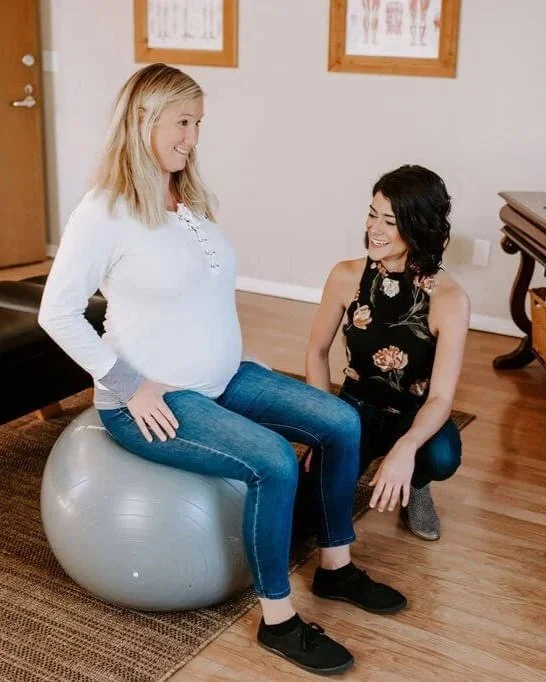
No Drive. No Waiting Room. Just You and Your Body, Ready for Birth.
Every session meets you where you already are, whether that's your living room, your bedroom, or wherever feels most comfortable. No commute, no parking, no taking time off just to show up somewhere.
You still get the same live, personal attention as an in-person visit, just without leaving your house. Log on, get assessed, and walk away with a plan built specifically for your body.